Everyone has advice on how to show up in AI answers like ChatGPT — write good content, get on directories, stay active online. Most of it is repeated on faith. Recently an SEO researcher, Suganthan Mohanadasan, actually watched what the engine does by reading the raw data ChatGPT sends to his browser. A few of his findings matter for your firm.
The engine reads your page for facts, and someone else's for the verdict
When an AI engine answers a question, it does two separate things. It reads your site to lift facts — names, results, specifics it can quote. And it reads other sites to decide what to recommend. So your page can supply that you handle truck accident cases in a given county, while the answer to “who is the best truck accident lawyer here” gets sourced from a directory or a press mention. You provide the facts about yourself; the recommendation comes from elsewhere.
If the engine can't read it, it doesn't exist
The engine scans the actual text on your page. When the information it wants is loaded by JavaScript, buried in a PDF, or baked into an image, it often can't read it — and rather than guess, it takes the fact from someone else's site instead. For a firm, that means verdicts trapped in a slider, attorney credentials living only in a downloadable PDF, or a results page that loads its numbers after the page appears. A human sees them fine; the machine sees nothing. Your strongest proof points go invisible at the moment an engine is deciding whether to mention you.
Depth beats volume, and you can't cite yourself
Near-identical pages from the same site collapse into one — twenty thin city pages do not give you twenty chances, they give you one. A single strong page behind a claim beats a stack of weak ones. And because a recommendation has to be sourced from somewhere other than you, outside coverage — reputable directories, press, consistent profiles — is what supplies it. A flawless site with no outside corroboration gets its facts read and someone else recommended.
What to actually do
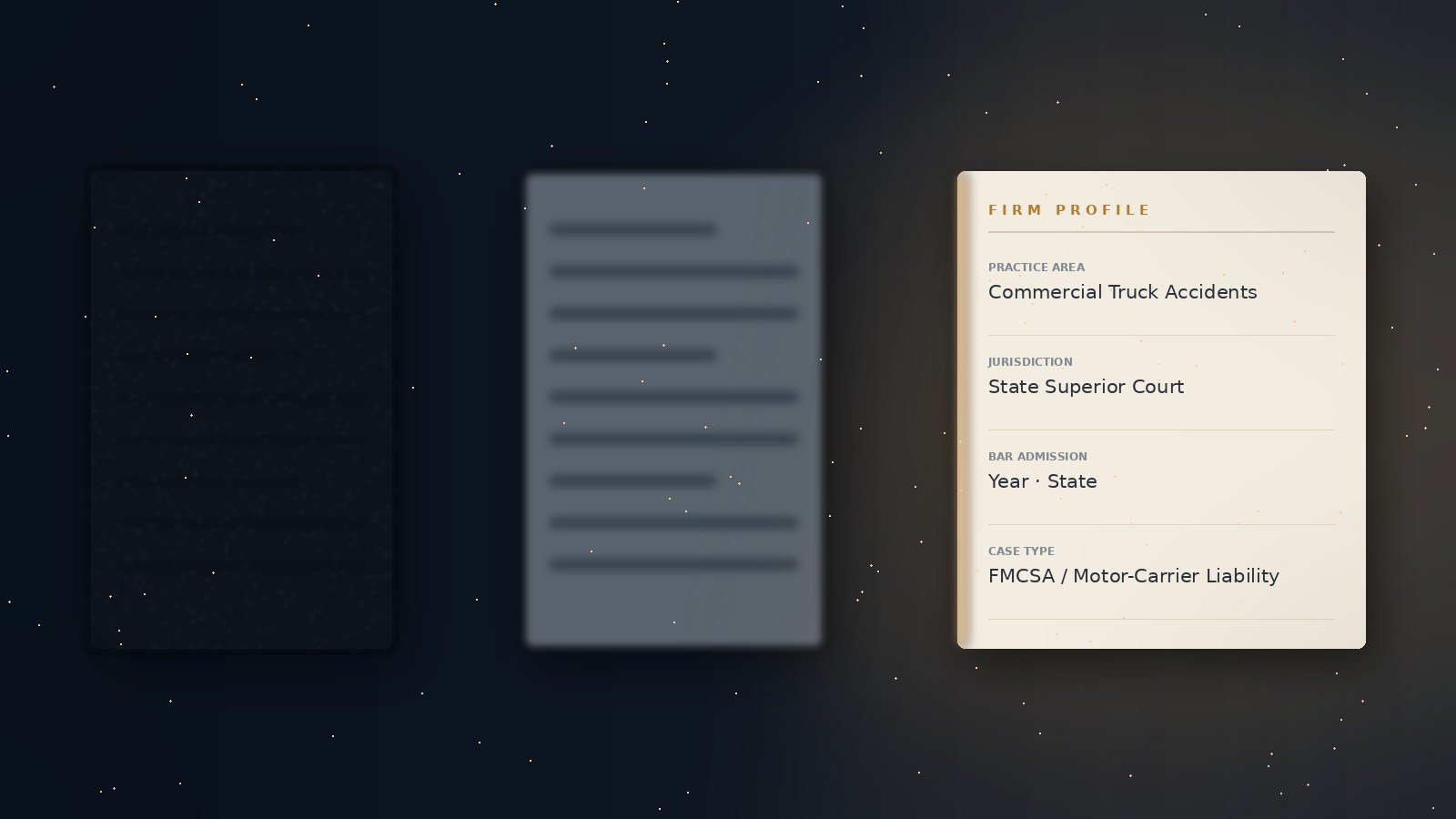
Put the facts you want an engine to use — attorneys, admissions, practice areas, jurisdictions, verdicts — in plain, machine-readable text, not in widgets, PDFs, or images. If you can't copy and paste it from the page, an engine probably can't read it. Keep your pages specific and consistent, build depth instead of near-duplicates, and earn third-party coverage so the recommendation has somewhere to come from.
One honest caveat: these findings are solid on structure but were observed mostly on technology and shopping questions, not legal ones, and AI systems change week to week. Treat it as a current snapshot, not a permanent rulebook — but the basics above are unlikely to stop mattering.
The firms that do well as AI answers replace the old list of links won't be the ones gaming a formula. They'll be the ones an engine can actually read.
Source: Suganthan Mohanadasan, “How ChatGPT Actually Picks Sources,” June 2026 (suganthan.com). The author separates firm structural findings from directional figures drawn from a small, technology-weighted sample; reported percentages are not applied to legal queries here.