Author: Paul J. Bruemmer – Jury Analyst
Note for readers: Articles posted here at EntityLevelAuthority.com offer the plaintiff bar strategic guidance on digital visibility and performance marketing in the AI era, equipping them to attract the right cases and advocate for plaintiffs who genuinely deserve compensation.
The Shift Has Happened

Zach Cohen and Seema Amble‘s article May 28, 2025 “How Generative Engine Optimization (GEO) Rewrites the Rules of Search” positions GEO as the emerging successor to traditional SEO. In addition of optimizing for search result rankings, brands must now aim to be directly cited within answers generated by large language models (e.g., GPT‑4o, Gemini, Claude, Perplexity).
WORTH NOTING: The authors of the referenced article are neither marketers chasing trends nor traditional SEO specialists.
Zachary Cohen is an investor on the Consumer team at Andreessen Horowitz focused on companies building at the application layer in Generative AI.
Seema Amble is a partner focused on early stage SaaS and B2B fintech investments globally at Andreessen Horowitz.
Andreessen Horowitz (a16z) is a $45 billion venture capital firm that invests at every stage in breakthrough technology sectors like AI, healthcare, fintech, crypto, and beyond, supporting visionary founders shaping the future.
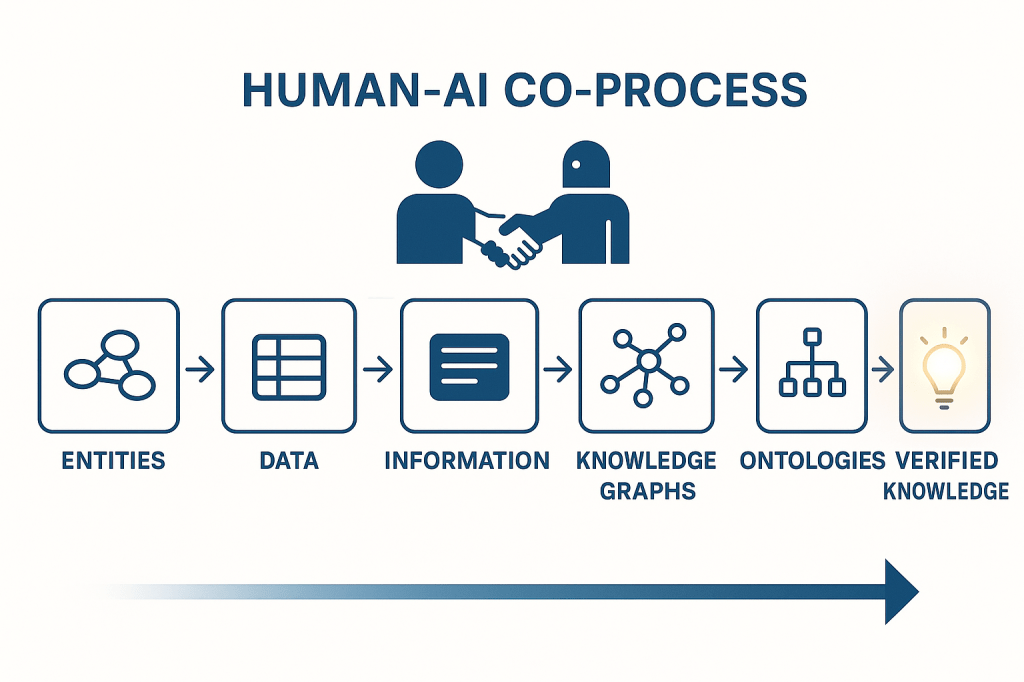
The landscape of digital visibility is rapidly transforming—from a past dominated by keyword tactics and backlink metrics to a dynamic, AI-driven ecosystem grounded in semantic analysis, machine-inferred insights, and entity-level authority.
Search engines, powered by Large Language Models (LLMs), are no longer simply ranking web pages—they are synthesizing knowledge, interpreting context, and serving up relevant answers directly through answers generated by LLM models (e.g., GPT‑4o, Gemini, Claude, Perplexity).
This shift signals the dawn of a new era in digital strategy: one where visibility comes from structured knowledge rather than traditional page rank.
As we embrace the reality of Generative Engine Optimization (GEO) and LLMO (Large Language Model Optimization), the game has moved far beyond SEO tactics.
Entity-Level Authority
For over 30 years, SEO pioneers and professionals focused on optimizing a site’s content, structure, and backlinks to secure top rankings. But in today’s world of performance marketing channels for the AI era, it’s no longer just about optimizing your page—it’s about optimizing your entities!
Entity-level authority has become the new currency of SEO, and as highlighted in several leading professionals’ LinkedIn posts from June 2025, the focus has shifted from simply “ranking” to truly “being known.”
“It’s no longer about page rank; it’s about being cited and trusted across an AI network of authoritative sources.” – Casey Petersen, LinkedIn
Per GPT‑4o edited/verified ~ “As answers generated by large language models (e.g., GPT‑4o, Gemini, Claude, Perplexity) increasingly draw from a wider range of sources—including structured FAQs, public legal documents, machine-readable PDFs, and expert insights—being recognized as a distinct entity within Google’s semantic ecosystem is more critical than ever.“
Attention plaintiff trial lawyers – If your law firm’s name isn’t tied to trusted structured data (such as verdict amounts, jurisdiction details, or case summaries), your visibility will drop off significantly as LLM models begin to dominate organic search results.
Patented Technology: Mapping Entities to Attributes

This AI-based shift isn’t hypothetical. Google’s own Patent US9864795B1 outlines how the company uses ontologies—systems that classify and map entities to structured attributes—to enhance its search capabilities.
The patent describes a process that allows Google to connect people, places, things, and events with corresponding attributes like “birthplace,” “case results,” and “jurisdiction.”
This patent forms the backbone of Google’s AI-driven search evolution, enabling deeper, more meaningful connections between entities and their attributes. We are predicting Google will ultimately dominate the AI search race.
The technology outlined in this patent is critical to understanding how Google generates knowledge panels and provides featured snippets. For everyone including law firms, this means having structured data, like court documents, verdicts, and legal insights, in machine-readable formats to ensure your firm is cited correctly when relevant queries arise.
The GEO Feedback Loop
The key takeaway here is that entities that consistently demonstrate authority across multiple trusted platforms (court records, expert commentary, high-quality legal publications) will rise to the top of LLM models. For law firms, this requires not just optimizing websites, but building a comprehensive digital presence across all high-authority channels.
AI is a Whole New Beast
SEO’s core principles remain intact—savvy practitioners will still rank pages in search—but today, it also demands being recognized by AI systems as a credible, high-value entity. For law firms, this means adopting new strategies aligned with the evolving landscape of AI-powered search
AI is evolving SEO into distinct paths centered on recognition—where success depends less on individual pages and more on the credibility of the underlying entity, as LLMs favor trusted sources over standalone content.
Authors Conclusion: The Semantic Economy
As we move into a future powered by AI, LLMs, and AI-driven search, the value of traditional SEO strategies continues. The real game now is entity optimization—getting your firm recognized, validated, and trusted across the broad ecosystem of legal content. Astute professional SEO’s are poised for this work.
This new approach represents a semantic economy where relationships between entities—not just keywords—drive success.
The law firms that succeed will be those who adapt quickly, become authorities in their space, and build knowledge graphs that reflect Google’s ontology.
The game has shifted. And those who recognize and embrace this change will secure their future in AI-driven search.
How Plaintiff Law Firms Can Start to Build Their Own Entity Knowledge Graph for Optimized AI Search Presence
Building an entity knowledge graph isn’t an overnight task, but it’s an essential step for future-proofing your law firm’s digital presence in the age of AI-driven search.
Here’s how law firms can begin constructing their own entity knowledge graph, ensuring they are optimized for LLM-based searches, and Position 0 results.
Identify Core Entities Within Your Firm

Start by identifying all the core entities that define your law firm’s identity. These typically include:
- Law Firm (name, location, contact info, website)
- Attorney (individual names, specialties, qualifications)
- Practice Areas (personal injury, medical malpractice, product liability)
- Case Types (e.g., wrongful death, class action)
- Case Outcomes (e.g., settlements, verdicts, jury decisions)
- Jurisdiction (regions or courts where your firm operates)
These are the building blocks for your graph, which will be mapped to attributes (e.g., “attorney specializing in wrongful death” or “verdict amount”).
Entities are the foundational units. Every document, case, and attorney has its place in this structure.
Use Structured Data and Schema Markup
Next, apply schema.org markup to the web pages that represent these entities. For example:
- For attorneys, use
Personschema to define the attorney’s name, position, area of expertise, and client reviews. - For cases, use the
LegalServiceschema to describe the type of case, verdicts, settlements, and client testimonies. - For practice areas, use
Serviceschema to represent legal services offered by the firm.
This structured data helps search engines like Google understand what your content is about and how different pieces of content (like a case summary or an attorney bio) relate to each other.
Build Internal Linking to Reinforce Entity Relationships
Within your website, internally link content that supports or relates to each entity. For example:
- Link attorneys to their specific case results (e.g., a page detailing the attorney’s verdict history).
- Link practice areas to relevant case types (e.g., wrongful death cases in the personal injury section).
- Connect jurisdictions to specific court filings or case results.
These internal links act as a map for both users and search engines, reinforcing the relationships between entities and their attributes.
Create and Publish Structured Content
Publish content that includes and reinforces the entities and their relationships. Examples include:
- Case Studies: Feature a detailed case study on a landmark verdict, making sure to tag it with the relevant attorney, case type, practice area, and jurisdiction.
- Legal Articles: Write blog posts or knowledge articles that explore key legal concepts relevant to your practice areas. Use structured formats like FAQs, How-to Guides, and Legal Explainers—all marked up with schema to define entities.
- Public Documents: Upload machine-readable court documents, verdict summaries, and legal reports to your website. Use structured data like
PDForArticleschema to label and connect these documents with their respective entities.
Monitor and Update Your Knowledge Graph

Just as Google continuously updates its own knowledge graph, you need to keep your entity knowledge graph up-to-date with:
- New case results and settlements.
- Attorney profile updates, including new certifications, accolades, or recent cases.
- New jurisdictions as the firm expands its reach.
This dynamic nature of your knowledge graph ensures that it remains relevant for LLM-driven results.
Leverage External Sources to Validate Your Knowledge Graph
Finally, external validation plays a crucial role in building authority. To enhance the visibility and credibility of your knowledge graph:
- Publish guest articles in legal journals or reputable media outlets where your firm is cited.
- Get quoted in interviews or articles on platforms like LegalTech News, Law360, or ABA Journal. These sources strengthen the entity’s authority and help AI models recognize you as a legitimate, trusted source.
The most significant factor in modern SEO is no longer the content itself, but the validation and reinforcement of that content across trusted, external platforms.
Conclusion: Start Building Your Entity Knowledge Graph Today
The future of search is more than ranking on page one—it’s about becoming part of the knowledge feed that powers AI-driven search. Building your entity knowledge graph gives your law firm the structural foundation to thrive in this new semantic-driven world.
By focusing on entity relationships, leveraging structured data, and securing external validation, you can ensure that your law firm will be recognized and cited by AI engines like Google’s, securing your place in Position 0 amongst all language models (e.g., GPT‑4o, Gemini, Claude, Perplexity).

 Mastering the New Digital Landscape for 2030 and Beyond
Leave a comment