
Author: Paul J. Bruemmer

In the rapidly evolving world of SEO, the narrative that “SEO is dead” couldn’t be further from the truth. Instead, SEO has transformed into a much more complex and nuanced field that requires a new kind of expertise and team dynamic. As we look towards the future from 2025 to 2030, building the ultimate SEO dream team is not just an option, but a necessity for businesses aiming to thrive in the digital landscape. This blog post explores how to assemble a diverse group of professionals—from visionary project managers and data scientists to semantic web gurus and innovative SEO strategists—who can navigate the sophisticated terrains of modern SEO. Together, they will not only meet the challenges presented by advanced algorithms and changing user behaviors but will also drive success through creativity, strategic insight, and cutting-edge technology, proving once and for all that SEO is very much alive and kicking.
We Must Think and Plan Ahead 3-5 Years
Let’s embark on an adventure to create the ultimate SEO dream team for the future, 2025 to 2030. As we delve into this journey, you’ll quickly realize why some might proclaim that SEO is dead. In truth, SEO hasn’t died—it has evolved into a more sophisticated and intricate discipline. Although mastering this new landscape might seem daunting, with the right mix of talent, guidance, and leadership, it’s entirely manageable.
The following vision is how we can craft a team that not only meets the challenges of modern SEO but thrives in them.
This dream team is not just about having the right skills but also about fostering a collaborative and innovative environment where each member can contribute to their fullest potential. With a team like this, SEO becomes an exciting challenge rather than a daunting task. It’s about pioneering new strategies, leveraging cutting-edge technologies, and driving sustainable growth through intelligent data use and content excellence. Together, this team will not just adapt to the future of SEO; they will shape it.
Structured Data
First let’s talk about Structured Data, it kinda starts here. Warning, this could put you into a deep sleep.
Structured data and the semantic web are significant contributors to the advancement of generative AI in search engine results, enhancing both the accuracy and relevance of the information retrieved. Here’s how each contributes:
Structured Data
Definition and Role: Structured data refers to any data that is organized in a predefined format, often using schemas and models like JSON-LD, Microdata, or RDF (Resource Description Framework). Search engines use structured data to understand the content of web pages more effectively. This data provides explicit cues about the meaning of the data, its relationships, and its hierarchy.
Examples and Impact:
1. Rich Snippets and Enhanced Search Results: By utilizing structured data, websites can help search engines generate rich snippets—detailed search results that include additional information like ratings, pricing, availability, and more. For instance, a search result for a recipe might show the cooking time, calorie count, and user ratings directly in the search results, making it more informative at a glance.
2. Voice Search Optimization: Structured data helps AI understand the context and relationships of information, crucial for voice searches where users expect direct and precise answers. For example, querying a voice assistant about “weather in New York” will directly pull up structured data that provides current conditions, temperature, and forecasts.
3. E-commerce Search Enhancements: For online shopping, structured data allows search engines to display products with their features, prices, and other relevant data clearly. This enables users to compare products directly from search results without needing to visit multiple websites.
4. Google Patents for Semantic Search 2024
Semantic Web

Definition and Role: The semantic web extends the web by setting standards that help computers to understand the meanings of information on the web. It uses technologies such as RDF, SPARQL (a query language for databases), OWL (Web Ontology Language), and others to create a universal framework that allows data to be shared and reused across application, enterprise, and community boundaries.
Examples and Impact:
1. Contextual Understanding and Query Specificity: Semantic web technologies enable search engines to comprehend queries not just by keywords but by the intended meaning. For instance, if someone searches for “Apple,” the semantic web can help distinguish whether the search refers to the fruit or the technology company based on the context provided by other search terms or previous user behavior.
2. Knowledge Graphs: Major search engines use semantic web technologies to build extensive knowledge graphs that organize information about entities (like people, places, and things) and their interrelations. This allows generative AI models to produce search results that are not only based on keyword matching but also on an understanding of the relationships and attributes of entities.
3. Personalization: By leveraging semantic understanding, search engines can tailor results more accurately to individual users. For example, understanding a user’s long-term interests and the semantic context of their queries allows for more personalized and relevant search results.
Conclusion
Both structured data and the semantic web fundamentally enhance how generative AI processes and generates search engine results. They enable a deeper understanding of user queries and web content, leading to more accurate, context-aware, and richly detailed search outcomes. This contributes to an overall more efficient, user-friendly, and intelligent search experience.
Generative AI
Generative AI refers to a subset of artificial intelligence technologies that can generate new content, ranging from text and images to music and code, based on the patterns and data they have learned from their training datasets. These AI systems use various machine learning models, primarily deep learning techniques, to understand and produce outputs that are similar to human-created content.
Key Characteristics of Generative AI:
1. Content Creation: Unlike traditional AI models that are primarily analytical, generative AI can create new content, essentially “generating” outputs from inputs it receives.
2. Learning from Data: Generative AI models are trained on large datasets, learning patterns, styles, or the underlying structure of the training data. This training enables them to produce new data instances that mimic the original data in a realistic or useful way.
3. Adaptability: These models can adapt to different formats and requirements, making them versatile across various fields such as text generation, art creation, synthetic data generation, and more.
Examples of Generative AI Technologies:
1. Generative Adversarial Networks (GANs): These consist of two neural networks contesting with each other to generate new, synthetic instances of data that can pass for real data. They are widely used in creating realistic images and videos.
2. Transformers: Used in natural language processing, transformers like GPT (Generative Pre-trained Transformer) are capable of generating coherent and contextually relevant text based on the input they receive.
3. Autoencoders: Often used in data compression and generation, autoencoders learn a compressed representation of data, then reconstruct the input data from this representation, which can be used to generate new data points.
Generative AI is significant for its ability to automate creative tasks, enhance human creativity with AI-driven tools, and provide scalable solutions across various domains, from entertainment and media to scientific research and technology development.
Website owners should care about generative AI, structured data, and the semantic web because these technologies can significantly enhance the functionality, visibility, and user experience of their websites, leading to better user engagement and potentially higher revenue.
Here’s a simple breakdown of why each is important:
Generative AI
What it is: Generative AI can create content, answer questions, or even chat with users based on the information it’s learned from. It’s like having a really smart assistant who can help with a wide range of tasks automatically.
Why it matters for website owners:
– Content Creation: Generative AI can help produce new content quickly, keeping a website fresh and engaging without the constant need for human input.
– Customer Interaction: It can power chatbots and help desks, providing immediate responses to customer inquiries, which improves user satisfaction.
– Personalization: AI can tailor the browsing experience, suggesting content or products that users are more likely to be interested in, which could increase sales or user engagement.
Structured Data
What it is: Structured data is a way of organizing information on your website so that search engines can understand it better. It’s like using a neat filing system that helps Google know where everything is and what it means.
Why it matters for website owners:
– Improved Search Visibility: Using structured data helps search engines display your site more prominently in search results, through rich snippets like star ratings for products or recipes with cooking times and calorie counts.
– Better Targeting: It allows search engines to accurately present your website in search results when users are looking for something specific that you offer, increasing the likelihood of attracting interested visitors.
Semantic Web
What it is: The semantic web is an extension of the current web that allows data to be shared and reused across applications, enterprises, and community boundaries. It’s about creating a common language that helps computers “understand” and respond to user requests more accurately.
Why it matters for website owners:
– Smarter Search Results: With the semantic web, search engines can better understand the context of the content on websites, leading to more accurate search results. For example, distinguishing between apple the fruit and Apple the company.
– Interconnectivity: By contributing to a more connected and intelligent web, where data from different sources can be linked and understood, websites can enhance their functionality, providing users with a more integrated and smart browsing experience.
In sum, embracing these technologies can make a website smarter, more discoverable, and more engaging, which is essential for staying competitive in today’s digital landscape.
Hang on, we’re not done, and we’re going deeper.

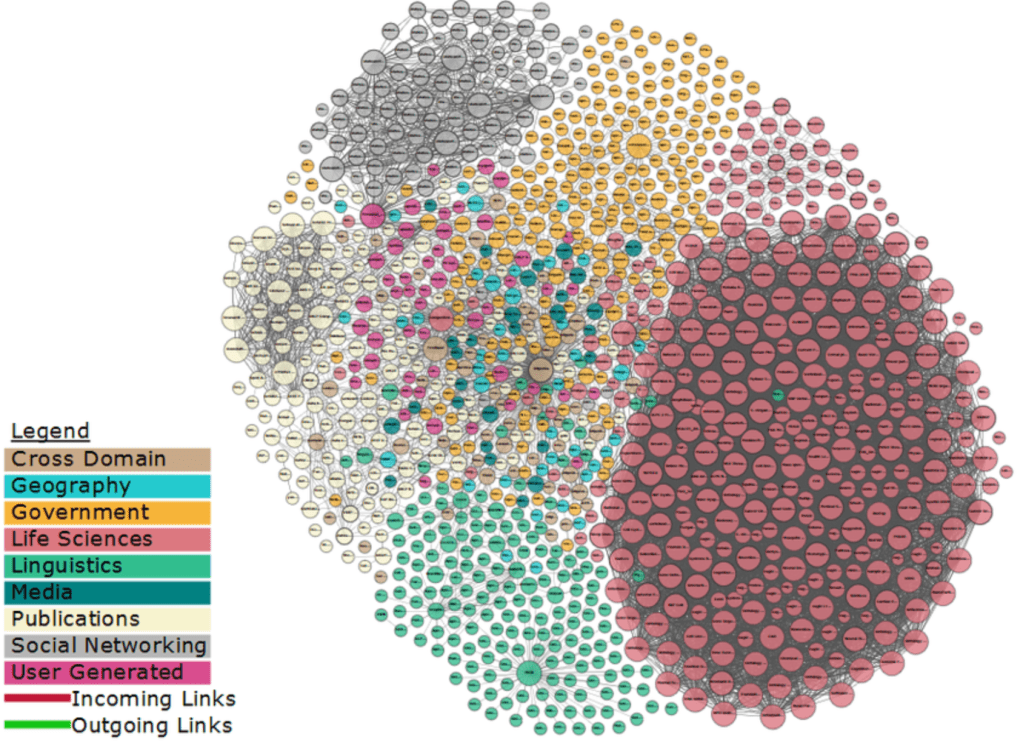
Linked Open Data (LOD) is a part of the broader concept of the semantic web, aimed at making data interconnected and machine-readable across the internet. Here’s a simple breakdown of what LOD is and how it fits with other technologies like search engine optimization (SEO), the semantic web, structured data, and generative AI.
Linked Open Data (LOD)
Definition: Linked Open Data refers to a set of best practices for publishing and connecting structured data on the web. The idea is to make data freely available and easily accessible in a format that can be read and used by computers. LOD uses standard web technologies (such as HTTP, URI, and RDF) to allow data from different sources to be connected and queried.
How LOD fits in with SEO, Semantic Web, Structured Data, and Generative AI
SEO (Search Engine Optimization):
– Enhanced Discoverability: LOD helps search engines better understand the content of a website by linking it to other relevant and authoritative data across the web. This can improve a site’s visibility and ranking.
– Richer Snippets: By connecting data more meaningfully, LOD can improve the richness of the snippets displayed in search results, making them more attractive and informative to potential visitors.
Semantic Web:
– Core Component: LOD is an integral part of the semantic web vision. It aims to create a web of data that can be directly interpreted by machines, where data is not only linked but also made semantically clear, meaning that its meaning is understandable.
– Interoperability: LOD promotes a standard method for data interchange, which is foundational for realizing the semantic web’s goal of data reusability and a more intelligent internet.
Structured Data:
– Interlinked Data Sets: While structured data organizes information to make it understandable to search engines, LOD takes it a step further by linking this data across different websites. This linking helps to provide a more comprehensive understanding of the data, improving content relevance and context.
– Data Enrichment: LOD can enhance the value of structured data by providing additional context and connections to other relevant data on the web, offering more depth to the information presented on a site.
Generative AI:
– Data Source for AI Training: LOD provides a rich and extensive source of interconnected and semantically tagged data, which can be used to train generative AI models. This training can enhance the AI’s ability to understand and generate content that is not only relevant but also contextually enriched.
– Enhanced Content Creation: With access to a broader range of linked data, generative AI can produce more accurate and nuanced content. For example, an AI writing assistant can generate more detailed and accurate articles or reports by leveraging data from multiple linked sources.
Conclusion
Linked Open Data enhances the ecosystem of the semantic web, structured data, SEO, and generative AI by providing a framework that makes data more accessible, understandable, and useful across different platforms. For website owners and developers, engaging with LOD means not only enhancing the reach and quality of their data but also improving their overall web presence and the effectiveness of their AI implementations.
Digging deeper…
Entity Search
Entity search refers to a specialized search method focused on finding information about specific entities such as people, places, products, organizations, or events. Unlike traditional keyword-based searches, entity search aims to understand the user’s intent and the context behind queries to deliver more accurate and relevant results centered around the entity in question.

How Entity Search Fits into LOD, SEO, Semantic Web, Structured Data, and Generative AI
1. Linked Open Data (LOD):
– Rich Entity Context: LOD helps in entity search by providing a wealth of interconnected data about entities. Through LOD, different data sources link together, offering comprehensive information about an entity, such as a person’s biography linked to their professional achievements, publications, and affiliations. This interconnected data structure allows entity searches to pull more accurate and rich information from across the web.
2. Search Engine Optimization (SEO):
– Enhanced Entity Recognition: Entity search optimizes SEO by allowing search engines to recognize and classify web content by entities rather than mere keywords. This leads to more precise indexing and, consequently, more relevant search results for queries targeting specific entities.
– Entity-Centric Content Ranking: By understanding entities and their relationships, search engines can rank content more effectively based on relevance to the user’s query about a particular entity, improving the quality of search results and user satisfaction.
3. Semantic Web:
– Semantic Understanding of Entities: The semantic web’s focus on data meaning and relationships directly supports entity search by enabling a deeper understanding of entities and their semantic connections. This capability allows search engines and other applications to process and respond to queries with a focus on the entity’s meaning and context, not just the text.
– Query Processing: In the semantic web framework, queries can be processed in a way that understands the type of information sought about an entity, enhancing the precision of the search results.
4. Structured Data:
– Entity Recognition and Disambiguation: Structured data helps search engines clearly identify and differentiate entities on a webpage. For example, microdata or RDFa can mark up an article about “Apple the company” as distinct from “apple the fruit,” aiding in more accurate entity recognition.
– Rich Snippets for Entities: Structured data enables the creation of rich snippets in search results, which are particularly useful for entity searches by highlighting key information (like a person’s birthdate or a company’s founder) directly in search results.
5. Generative AI:
– Dynamic Entity Profiles: Generative AI can utilize the concepts of entity search to dynamically generate content or responses based on specific entities, pulling from structured and linked data to create comprehensive, context-aware profiles or summaries about entities.
– AI-driven Entity Exploration: In applications such as digital assistants and recommendation systems, generative AI can use entity search to provide users with information that is not only relevant but also enriched with details and insights about the entity in question.
Conclusion
Entity search is a powerful tool in the context of modern web technologies and AI, enhancing the way information is structured, linked, and retrieved. It plays a crucial role in making searches more intelligent and user-centric, leveraging technologies like LOD, the semantic web, structured data, and generative AI to deliver precise, contextually relevant content centered around specific entities.
Tools
Implementing technologies such as Linked Open Data (LOD), search engine optimization (SEO), the semantic web, structured data, and generative AI involves a variety of tools and frameworks.
Below is a list of recommended tools for each area:
1. Linked Open Data (LOD)
– Apache Jena: A framework for building semantic web and linked data applications. It includes a programmable RDF triple store and an SPARQL query engine.
– Virtuoso: A multi-model data server used for RDF, XML, and LOD applications. It supports SPARQL querying and is robust for large datasets.
2. Search Engine Optimization (SEO)
– Google Search Console: A tool provided by Google that helps you monitor, maintain, and troubleshoot your site’s presence in Google Search results.
– SEMrush: A comprehensive SEO toolkit that offers solutions for SEO, PPC, content, social media, and competitive research.
– Moz Pro: An SEO software that helps with keyword research, SEO audit, and link building.
3. Semantic Web
– Protege: An open-source ontology editor and a knowledge management system that supports creating, managing, and manipulating structured, semantic data.
– Stanford CoreNLP: A suite of language tools providing part-of-speech tagging, the named entity recognizer, coreference resolution system, sentiment analysis, and more, which are useful in processing and understanding web content at a semantic level.
4. Structured Data
– Schema.org: Provides a collection of shared vocabularies webmasters can use to mark up their pages in ways that can be understood by major search engines.
– Google’s Structured Data Testing Tool: Allows you to check the validity of your structured data markup and test it against Google’s recommendations and requirements.
– JSON-LD: A lightweight Linked Data format. It’s easy for humans to read and write, and easy for machines to parse and generate. Commonly used to implement structured data on websites.
5. Generative AI
– OpenAI GPT-4: A state-of-the-art language prediction model by OpenAI that excels in generating human-like text and can be used for content creation, customer support, and more.
– Hugging Face’s Transformers: Provides state-of-the-art general-purpose architectures for natural language understanding and generation, which can be leveraged to implement generative AI features on websites.
– TensorFlow and PyTorch: Popular frameworks for machine learning that can be used to develop and train custom AI models for specific tasks such as image generation, text generation, or any other form of content generation.
Common Tools and Libraries for Development
– RDFLib: A Python library for working with RDF, a core technology of the semantic web.
– SPARQL: An RDF query language; it’s considered a key technology for accessing, manipulating, and querying semantic web data layers.
Using these tools, developers and website owners can build more intelligent, efficient, and user-friendly websites that leverage the power of modern web and AI technologies. Each tool has its strengths and is suited for specific parts of the implementation process, so choosing the right tools according to your project needs is essential.
Technical Skills and Knowledge
Implementing strategies and tools related to Linked Open Data (LOD), search engine optimization (SEO), the semantic web, structured data, and generative AI requires a blend of technical skills, knowledge of specific technologies, and an understanding of data handling. Here’s a detailed breakdown of the skills and knowledge necessary for each area:
1. Linked Open Data (LOD)
– Knowledge of RDF (Resource Description Framework): Understanding how to use RDF to describe web resources is crucial for creating linked data.
– SPARQL Query Language: Proficiency in SPARQL is necessary for querying RDF data, allowing you to retrieve and manipulate data stored in RDF format.
– Understanding of URI (Uniform Resource Identifier): Knowing how to assign and manage URIs for resources is essential for ensuring that data is accessible and linkable on the web.
2. Search Engine Optimization (SEO)
– Keyword Research: Skills in identifying and analyzing potential keywords to target for maximum SEO impact.
– Content Optimization: Ability to write and structure content that is SEO-friendly, including using appropriate headings, meta tags, and alt text.
– Technical SEO: Knowledge of sitemaps, robot.txt files, canonical tags, and how to optimize website loading speed and mobile responsiveness.
3. Semantic Web
– Ontology Design: Experience in creating ontologies, which are formal representations of a set of concepts within a domain and relationships between those concepts.
– Semantic Technologies: Familiarity with technologies like OWL (Web Ontology Language), RDF, and RDFS (RDF Schema).
– Data Interoperability: Understanding how to make data reusable across different applications and domains through the use of standards and ontologies.
4. Structured Data
– Markup Languages: Proficiency in JSON-LD, Microdata, and RDFa for implementing structured data on web pages.
– Schema.org: Familiarity with the Schema.org vocabulary and how to apply it to mark up web pages to enhance their readability by search engines.
– Data Validation Tools: Skills in using tools like Google’s Structured Data Testing Tool to test and validate structured data.
5. Generative AI
– Machine Learning and Deep Learning: Strong foundation in the principles of machine learning and deep learning, including understanding of neural networks.
– Natural Language Processing (NLP): Skills in using NLP techniques to generate text, understand speech, or interpret language.
– Programming: Proficiency in programming languages like Python, which is widely used in AI development, and familiarity with AI frameworks such as TensorFlow, PyTorch, and Hugging Face’s Transformers.
General Skills
– Programming Languages: Strong command of programming languages like Python, JavaScript, and HTML/CSS for web development.
– Data Science: Ability to handle large datasets, perform data cleaning, and manipulate data effectively.
– Problem Solving and Analytical Skills: Ability to troubleshoot issues, optimize performance, and innovate solutions tailored to specific goals.
Learning Resources
– Formal Education: Courses in computer science, information technology, or data science.
– Online Courses: Platforms like Coursera, Udacity, or edX offer courses in SEO, AI, machine learning, and semantic web technologies.
– Workshops and Webinars: Participating in industry-specific training sessions can provide practical insights and real-world applications of these technologies.
Having a blend of these skills and knowledge will enable individuals or teams to effectively implement advanced web technologies and AI-driven strategies, enhancing the functionality, reach, and user experience of websites or digital platforms.
The Team

Assembling a team to effectively implement strategies involving Linked Open Data (LOD), search engine optimization (SEO), the semantic web, structured data, and generative AI can vary greatly depending on the scope and complexity of the project. However, a balanced team that covers all necessary skills without overburdening any single team member is ideal. Here’s a suggested team structure based on the range of skills required:
Suggested Team Structure
1. Project Manager/Team Lead
– Role: Coordinates the project, manages timelines, and ensures communication between team members and stakeholders.
– Skills: Strong organizational and leadership skills, experience in project management, and a good understanding of the technologies involved.
2. Data Scientist/Machine Learning Engineer
– Role: Focuses on developing and implementing generative AI models and handling large datasets.
– Skills: Expertise in machine learning, deep learning, natural language processing, and programming (Python, TensorFlow, PyTorch).
3. Semantic Web/LOD Specialist
– Role: Implements and manages the semantic web technologies and LOD frameworks.
– Skills: Proficiency in RDF, SPARQL, ontologies, and understanding of the principles of the semantic web.
4. SEO Specialist
– Role: Optimizes the website to improve search engine rankings and enhance user engagement.
– Skills: Experience in keyword research, content optimization, technical SEO, and analytics.
5. Web Developer
– Role: Integrates structured data, develops the front-end and back-end of web applications, and ensures website functionality aligns with SEO and semantic web standards.
– Skills: Strong in web programming (JavaScript, HTML/CSS), familiar with JSON-LD, and understanding of web architecture.
6. Content Creator/Editor
– Role: Produces high-quality, SEO-friendly content and ensures that content is optimized for both users and search engines.
– Skills: Strong writing skills, understanding of SEO principles, and ability to create engaging content that aligns with the strategic goals.
Team Size and Composition
– Project Scope: The size of the project directly influences the team size. Larger projects might require multiple specialists in the same area to handle increased workload or more complex tasks.
– Cross-Functional Skills: Team members who possess overlapping skills can reduce the total number of people required. For instance, a web developer with strong SEO skills can cover aspects of both roles.
– Budget and Resources: Financial constraints might limit team size, necessitating team members with multiple competencies.
– Duration and Scale: For short-term projects, fewer specialists might be needed, or consultants could be brought in to cover specific areas instead of full-time hires.
Estimation
For most mid-scale projects, a team of 5 to 6 full-time individuals as outlined above will be effective. This structure allows for coverage of all critical areas while maintaining efficiency and the ability to handle diverse tasks without significant overlap or gaps in skills.
Adjustments may be necessary based on specific project needs or organizational capabilities, but this framework provides a solid foundation for assembling a capable and versatile SEO dream team for 2025.
Recommended Reading
Quantum Supremacy: How the Quantum Computer Revolution Will Change Everything ~ by Michio Kaku.
Interesting Google Patents for SEO in 2023
Keep updated on SEO strategy and tactics




 Mastering the New Digital Landscape for 2030 and Beyond
Leave a comment